


The short answer, for Alabama
No, an executor cannot withdraw money from a deceased person’s bank account until the probate court has issued letters testamentary. Being named executor in a will is not authority. The letters are the authority, and the bank will ask for them.
That is the single most common misunderstanding we hear. Someone brings the will to the bank, the bank declines, and the family assumes something has gone wrong. Nothing has. The will nominates you; the court appoints you.
In Alabama that petition is filed in the probate court of the county where the person lived. Ala. Code § 43-2-27 governs the window in which a named executor must act before the right can pass to someone else, and § 43-2-851 governs when a bond is required. If there is no will, you are asking to be appointed administrator instead, under § 43-2-43(b).
Two things that often make this simpler than families fear: an account held jointly with right of survivorship or with a payable-on-death beneficiary generally passes outside the estate, and a genuinely small estate may qualify for summary distribution without appointing anyone at all.
Call 256-434-1678 and we will tell you in a few minutes which of those you are dealing with. More: how Alabama probate works · when there is no will · getting an EIN for the estate
The Alabama answer, before the general checklist
Most articles on this question are written for no state in particular. If the account is in Alabama, what happens next depends almost entirely on how the account was titled, and that determines whether you need anything from a probate court at all.
Three kinds of account, three different answers
Payable-on-death, or an account with a named beneficiary. This passes directly to the person named. It is not part of the probate estate. The named beneficiary generally needs a certified death certificate and identification, and nothing from a court.
Joint account with right of survivorship. The surviving owner keeps it. Again, no court involvement to access the funds — though whether the money is truly theirs to keep can be a separate question if the account was set up only for convenience.
An account in the deceased person’s name alone, with no beneficiary. This is the one that requires a court. No bank in Alabama will release those funds to a family member on the strength of a death certificate and a relationship. Somebody has to be appointed by the probate court and produce letters — letters testamentary if there is a will, letters of administration if there is not.
The small-estate shortcut, and the number nobody quotes correctly
Alabama has a summary distribution procedure for small estates that avoids a full administration. You will find articles confidently stating the dollar limit. Be careful with those figures: the limit is not fixed. It is adjusted using a Consumer Price Index formula set out in Ala. Code § 43-8-116, which means it moves, and a number published two years ago is very likely wrong today.
One restriction worth knowing before you count on this route: summary distribution is not available where the decedent is survived by a minor child who is not also the child of the surviving spouse. Requirements and filing practice also vary between county probate courts, so confirm the current threshold and the local procedure before relying on either.
What not to do while you wait
Do not keep using the debit card. Do not move money out “to keep it safe.” Do not pay yourself back for the funeral out of the account before you have authority. Families do all three constantly, usually with good intentions, and it is the single most common way a straightforward estate turns into a contested one — because every other heir eventually sees the statement.
Funeral expenses and legitimate debts do get paid from the estate. They get paid in the right order, by the person the court appointed, from an estate account — which needs its own EIN, obtained separately from the deceased person’s Social Security number.
We handle estate administration and probate across Limestone, Madison, Morgan, Lauderdale, Colbert, Franklin and Lawrence Counties. If you are trying to work out whether you need letters, whether the estate qualifies for summary distribution, or what the bank is going to ask for, call 256-434-1678 and we will tell you which route you are on.
Losing a loved one is hard enough without the added stress of dealing with financial matters. When someone dies, their bank accounts need to be closed properly. Understanding the documents needed to close a bank account after death can make this process less overwhelming.

To close a bank account after death, you’ll need several key documents, including the death certificate, proof of executor status, and identification. Banks have different rules, so it’s important to check with each one. Some may ask for extra papers like a will or court letters.
Closing accounts quickly helps prevent fraud and lets you settle the estate. It’s a crucial step in wrapping up your loved one’s affairs. With the right info and papers, you can handle this task smoothly and focus on healing.
Key Takeaways
- Death certificates and executor documents are essential for closing accounts
- Joint accounts may transfer automatically to the surviving owner
- Each bank has its own process for closing accounts after death
Understanding Probate and Legal Requirements
Probate courts play a key role in handling estates after someone dies. They oversee the process of validating wills and distributing assets. Getting the right legal documents is crucial for closing bank accounts.
Role of Probate Court
Probate court validates wills and appoints executors. When someone dies, the court reviews their will. If there’s no will, the court names an administrator.
The executor or administrator then gets legal authority to handle the estate. This includes closing bank accounts. The court issues important papers like letters testamentary or letters of administration.
These documents give the executor power to act on behalf of the estate. Banks need to see them before allowing access to accounts.
Obtaining Legal Documents
To close a bank account, you’ll need several key papers. First, get multiple copies of the death certificate. You may need to show this to various institutions.
Next, obtain letters testamentary or letters of administration from probate court. These prove you have the legal right to handle the estate’s affairs.
If there’s a will, bring that too. Some banks may ask for it. You’ll also need your own ID to prove who you are.
Keep in mind, requirements can vary by state. It’s wise to check with the bank about their specific needs. Having all documents ready will make the process smoother.
Identifying the Executor or Next of Kin

When someone dies, it’s crucial to identify who has the legal authority to handle their bank accounts. This person is typically the executor named in the will or the next of kin if there’s no will.
Responsibilities of the Executor
The executor plays a key role in managing the deceased’s finances. They must first obtain a Letter of Testamentary from the court. This document proves their authority to act on behalf of the estate.
With this letter, the executor can then approach the bank. They’ll need to present the death certificate and complete any required paperwork. The executor is responsible for:
- Notifying the bank of the death
- Freezing the accounts
- Opening a new account in the estate’s name
- Paying outstanding debts
- Distributing remaining funds to beneficiaries
Power of Attorney Considerations
A power of attorney (POA) is different from executorship. It’s important to note that a POA typically ends when the person dies. Therefore, someone with POA can’t usually access or close accounts after death.
In some cases, a POA might have been set up to continue after death. This is called a “durable” POA. Even so, banks often prefer to work with the court-appointed executor. They may require additional proof of authority from someone with a durable POA. (Documents Needed to Close Bank Account After Death)
Notifying Relevant Parties of the Death

Informing banks and other financial institutions about a person’s death is a crucial step. This process involves providing official proof and contacting the right people.
Providing Proof of Death
To close a bank account after someone dies, you need to show proof. The main document for this is a death certificate. You should get several certified copies of the death certificate.
Other documents that may be needed include:
- The deceased’s ID (driver’s license or passport)
- The executor’s ID
- A copy of the will or probate papers
These papers prove you have the right to handle the deceased’s affairs. Keep them organized and ready to show when asked. (Documents Needed to Close Bank Account After Death)
Contacting Financial Institutions
After gathering documents, the next step is to contact the bank. You can do this in person, by phone, or sometimes online. When you reach out, ask to speak with someone who handles deceased accounts.
Tell them about the death and ask what specific steps to take. Each bank may have its own process. Some things they might ask for:
- Account numbers
- The deceased’s Social Security number
- Your contact information
Some banks offer special support for this situation. For example, Wells Fargo has several ways to notify them about a death. Be prepared to send the death certificate to the bank’s designated address. (Documents Needed to Close Bank Account After Death)
Gathering Necessary Documentation

Closing a bank account after someone dies requires specific paperwork. These documents prove your authority to handle the deceased’s finances and confirm their passing. Let’s look at the key items you’ll need to gather.
Securing the Death Certificate
The death certificate is the most important document you’ll need. It’s official proof that the account holder has died. You can get copies from the funeral home or local vital records office.
Most banks want to see the original certificate. They may keep it or make a copy. It’s smart to get several copies, as you’ll need them for other tasks too.
The death certificate has key details like the person’s name, date of birth, and date of death. These help the bank confirm the account holder’s identity.
Compiling Account Information
Next, gather all the bank account details. This includes recent statements, checkbooks, and online login info. These show which accounts the person had and their balances.
Look for paper statements in the person’s files. If they used online banking, check their email for e-statements. You might need to contact the bank directly for help.
Make a list of all accounts, including checking, savings, and CDs. Note down account numbers and types. This info helps you close accounts faster and spot any you might have missed.
Collecting Beneficiary Information
Lastly, find out if the account had any named beneficiaries. Beneficiaries can often get the money without going through probate.
Check the account paperwork for beneficiary forms. The bank might also have this info on file. If there’s a will, it might name account beneficiaries too.
Payable on Death (POD) accounts transfer to the named person right away. For these, you’ll need the beneficiary’s ID and the death certificate to claim the funds.
If there’s no beneficiary, you’ll likely need court papers showing you’re the executor. This gives you the right to handle the account. (Documents Needed to Close Bank Account After Death)
Dealing with Joint and Online Accounts

Joint and online accounts require special handling after someone dies. The process depends on account ownership and digital access details.
Understanding Rights of Survivorship
Joint accounts often have rights of survivorship. This means the surviving account holder automatically becomes the sole owner when a co-owner dies. To update the account, you’ll need to provide the bank with a death certificate. The bank will then remove the deceased person’s name.
For accounts without survivorship rights, the process is different. In this case, the account may be frozen until the estate is settled. The executor will need to work with the bank to access funds or close the account.
Handling Digital Banking Concerns
Online accounts present unique challenges. First, gather any login information the deceased person left behind. If you don’t have this, contact the bank to explain the situation.
Many banks have specific procedures for dealing with online accounts after a death. You may need to provide:
- Death certificate
- Court documents showing your authority
- Proof of identity
Banks often disable online access once notified of a death. This helps prevent fraud. You’ll likely need to visit a branch in person to settle digital accounts. Be prepared to show all necessary documents. (Documents Needed to Close Bank Account After Death)
Settling Outstanding Debts and Claims

When someone dies, their debts don’t disappear. The estate must handle any outstanding bills or claims. This process involves careful management of funds and following legal requirements. (Documents Needed to Close Bank Account After Death)
Prioritizing Creditors and Debts
After a person’s death, certain debts take priority. Funeral expenses and estate administration costs usually come first. Next, the executor pays taxes owed to the government. Medical bills from the deceased’s final illness often follow.
Credit card debts and personal loans typically have lower priority. The executor must review all claims against the estate. They should verify each debt’s validity before payment. In some cases, debts may exceed available funds. When this happens, state laws determine the order of payment.
Using Estate Funds Responsibly
The executor must use estate funds wisely. They should pay debts from a dedicated estate account. This keeps estate finances separate from personal funds.
It’s crucial to keep detailed records of all transactions. These records help with preparing final tax returns. The executor should also set aside money for any ongoing expenses. These might include property taxes or utility bills on the deceased’s home.
If funds are limited, the executor may need to sell assets. This can help cover outstanding debts. However, they must follow the will’s instructions and state laws when doing so.
Accessing and Managing the Estate Account

After someone dies, setting up an estate account helps handle their money matters. This account lets the executor pay bills and manage assets.
Establishing an Estate Bank Account
To open an estate account, the executor needs certain documents. These often include a death certificate and court papers. The court may give a Letter of Testamentary or Letter of Administration.
Next, the executor must get a tax ID number from the IRS. This number is for the estate, not the person who died. With these items, the executor can go to a bank to open the account.
The account name usually includes the deceased person’s name and the word “estate.” For example, “Estate of John Smith, Jane Doe as Executor.”
Utilizing the Estate’s Finances
Once the account is set up, the executor can start managing the estate’s money. They can move funds from the deceased’s old accounts into this new one.
The executor uses this account to pay any debts or taxes the estate owes. They also use it to collect money owed to the estate. This might include final paychecks or insurance payouts.
Keeping good records is crucial. The executor should track all money going in and out. This helps when it’s time to give out what’s left to heirs.
In some cases, an affidavit may be needed to access funds. This is often true for smaller estates that don’t go through full probate.
Closing Bank Accounts of the Deceased
Closing a bank account after someone dies involves specific steps and paperwork. The process aims to properly handle the deceased’s funds and transfer them to the right people.
Completing the Necessary Paperwork
To close a bank account after a death, you’ll need certain documents. First, obtain several copies of the death certificate. Banks usually require an official copy.
Next, gather proof of your authority to act. This could be:
- Letters of administration
- Court order
- Probate documents
You may also need to show your ID and fill out the bank’s specific forms. Some banks have their own paperwork for account closures after death.
If the account was jointly held, the process might be simpler. In many cases, the surviving account holder can take full ownership.
Disbursing Funds to Beneficiaries
Once the paperwork is complete, the bank will release the funds. If there’s a will, it should name the beneficiaries. The executor then distributes the money according to the will’s instructions.
For accounts without a named beneficiary, the funds typically go to the estate. The executor then handles distribution based on the will or state law.
Some accounts, like payable-on-death accounts, transfer directly to named beneficiaries. This process is usually quicker and doesn’t require probate.
It’s important to keep clear records of all transactions. This helps avoid disputes and ensures proper handling of the deceased’s assets.
Understanding Beneficiary Designations
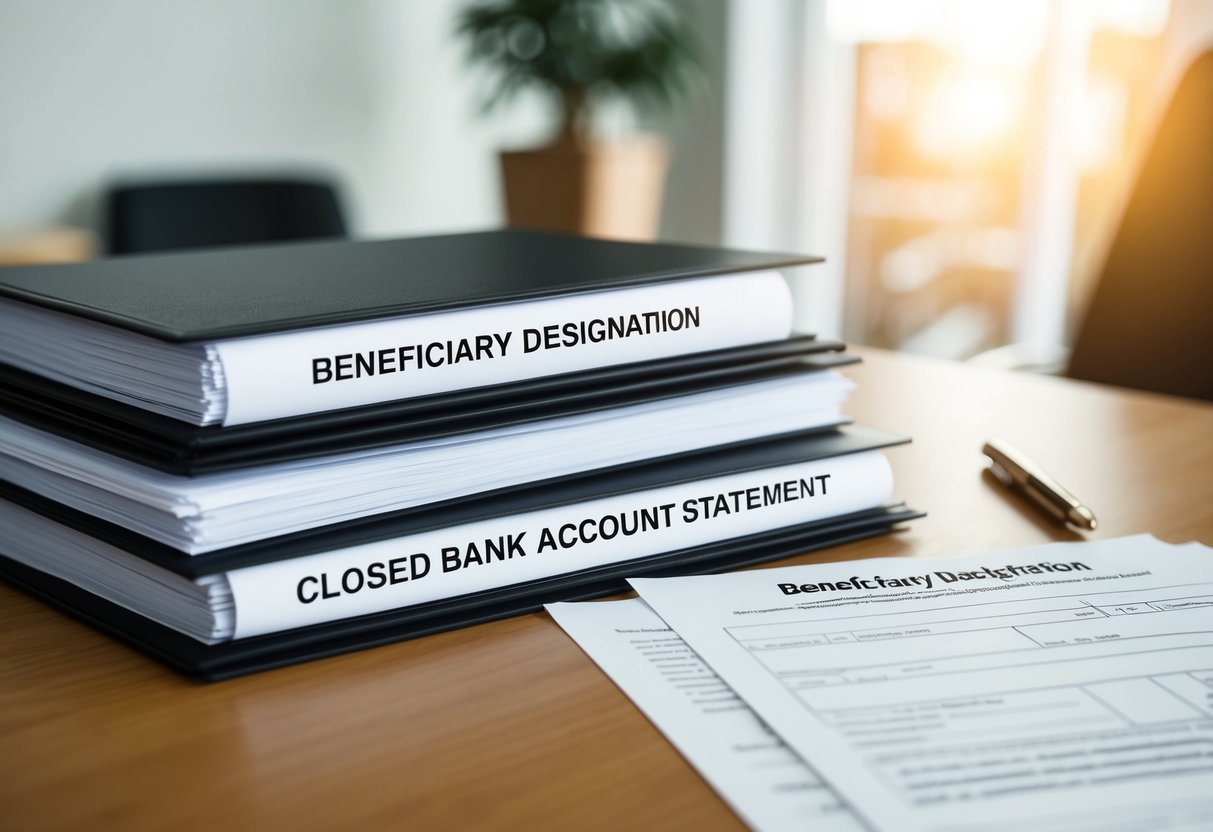
Beneficiary designations play a crucial role in managing bank accounts after death. They determine who receives the funds and can simplify the process of closing accounts.
Beneficiary Rights and Privileges
Payable-on-death (POD) accounts allow account holders to name beneficiaries. These individuals gain ownership of the account upon the original owner’s death. Beneficiaries have no access to funds while the account holder is alive. After death, they can claim the money by presenting a death certificate and ID to the bank.
Some accounts may have multiple beneficiaries. In this case, the funds are typically split equally among them. Beneficiaries can often avoid probate, which speeds up the process of receiving funds. Additionally, they may have the option to keep the account open or transfer the money to their own accounts.
Amending Beneficiary Information
Account holders can change beneficiary designations at any time. To do so, they should contact their bank and request the appropriate forms.
It’s important to keep beneficiary information up to date, especially after major life events like marriages, divorces, or births.
Banks usually require the account holder’s signature and sometimes a notary to amend beneficiary information. Some financial institutions allow online updates for beneficiary changes. Regular review of beneficiary designations is crucial to ensure they align with the account holder’s current wishes.
Finalizing Affairs with Social Security and Insurance

After a loved one dies, you need to notify important agencies and process claims. This involves contacting Social Security and dealing with insurance policies.
Reporting to Social Security
When someone passes away, it’s crucial to inform the Social Security Administration (SSA). You can do this by calling their hotline at 1-800-772-1213 or visiting a local SSA office.
The funeral director often reports the death, but it’s still your job to make sure it’s done. Once notified, the SSA will stop benefit payments. They may also provide death benefits to eligible family members.
Be prepared to give the SSA the deceased person’s:
- Full name
- Social Security number
- Date of birth
- Date of death
Processing Insurance Claims
Next, you’ll need to handle any insurance policies. Start by gathering all policy documents. Then, contact each insurance company to begin the claims process.
For life insurance, you’ll typically need:
- The original policy
- A death certificate
- Claim forms from the insurance company
Some policies may have specific requirements. Therefore, ask each insurer what they need to process the claim.
Remember, it’s important to act promptly. Many policies have time limits for filing claims after a death.
Frequently Asked Questions
Closing a bank account after someone dies involves specific steps and paperwork. Banks have procedures in place to handle these situations and protect the deceased’s assets.
How do I close a bank account of a deceased person?
To close a deceased person’s bank account, you’ll need to contact the bank and provide necessary documents. These typically include a death certificate and proof of your authority to handle the deceased’s affairs.
The bank will then guide you through their specific process. This may involve filling out forms and providing additional information about the account.
What documents are required to claim a deceased person’s bank accounts?
Banks usually require several documents to process a claim on a deceased person’s account. These often include:
- Death certificate
- Will or probate court documents
- Proof of your identity
- Letters of administration (if there’s no will)
The exact requirements may vary by bank and situation.
What is the procedure for handling bank accounts without a designated beneficiary after death?
When there’s no designated beneficiary, the account typically becomes part of the deceased’s estate. In this case, the executor or administrator of the estate will handle the account.
They must go through probate to gain legal authority over the account. After that, they can close it and distribute the funds according to the will or state law.
Is it possible to withdraw money from a deceased person’s bank account, and what are the legalities?
Withdrawing money from a deceased person’s account is generally not allowed without proper authorization. Doing so can be illegal and may be considered theft.
The rightful executor or administrator must handle any withdrawals. They can only do this after receiving legal authority through probate or other court processes.
How long is one permitted to keep a deceased person’s bank account open?
There’s no set time limit for closing a deceased person’s account. However, it’s usually best to handle it promptly to avoid complications.
Some banks may freeze the account upon notification of death. This prevents unauthorized transactions while the estate is settled.
What proof of death is required by banks to close a deceased person’s account?
Banks typically require an official death certificate to close an account. This document serves as legal proof of death.
Some banks may accept a certified copy, while others might require the original. You should check with the specific bank for their exact requirements.
Still not sure which of the three account types you are dealing with?
That one question decides everything else: whether you can walk into the bank with a death certificate, or whether somebody has to be appointed by a probate court first. Most people who reach the bottom of this page are somewhere in the middle — a joint account here, a solo account there, a beneficiary form nobody can find. We handle estate administration and probate across Limestone, Madison, Morgan, Lauderdale, Colbert, Franklin and Lawrence Counties, and telling you which route you are on is usually a short call rather than an engagement.
Questions about estate planning or probate? Email estateplanning@dsp.law or call 256-434-1678.
Daniel S. Pickens Law · 300 West Green Street, Athens, Alabama 35611

