Having a specialized lawyer can make a big difference in legal matters involving dogs. These attorneys focus on animal law and handle various dog-related cases. A lawyer for dogs can help with issues like bite incidents, custody disputes, and even veterinary malpractice.

Dog owners might need legal help in many situations. For example, if your pet is accused of biting someone, a dog lawyer can defend your case. They also assist with pet custody battles during divorces or breakups. Moreover, these lawyers can guide you through the process if you believe a vet has made a mistake in treating your furry friend.
Finding the right attorney for your dog-related legal needs is crucial. You can start by looking for lawyers who specialize in animal law. Many bar associations and online directories offer referrals for animal law attorneys. It’s important to choose someone with experience in cases similar to yours.
Key Takeaways
- Specialized lawyers handle various dog-related legal issues
- Animal law attorneys can assist with bite cases, custody disputes, and vet malpractice
- Finding an experienced dog lawyer is crucial for proper legal representation
Understanding the Case of Lawyer Dog
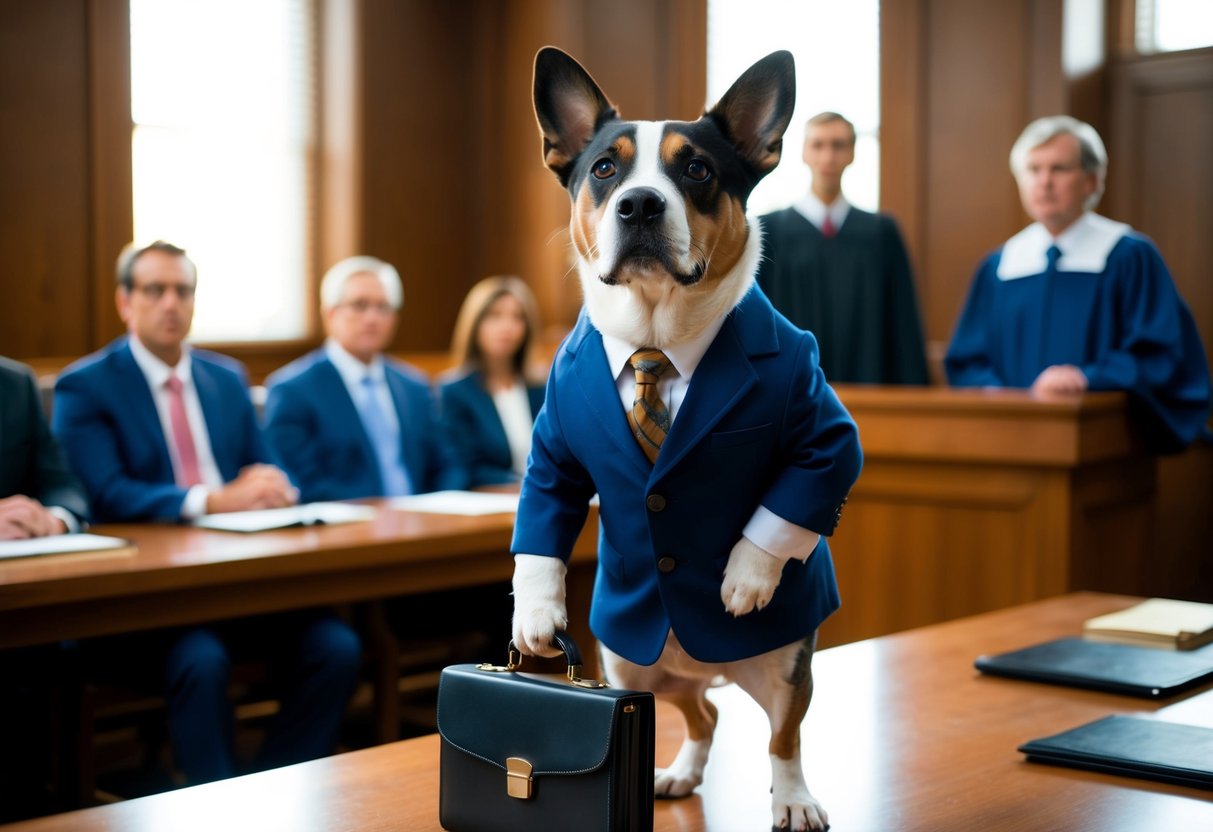
The “Lawyer Dog” case sparked debate over legal interpretation and linguistic nuances. It centered on a suspect’s request for counsel during police questioning.
Key Facts of Warren Demesme’s Case
Warren Demesme, 24, faced serious charges in New Orleans. During police questioning, he made a statement that became the focus of legal controversy. Demesme said, “If y’all think I did it, I know that I didn’t do it so why don’t you just give me a lawyer dog ’cause this is not what’s up.”
The police continued the interrogation after this statement. Demesme’s defense team argued that his confession should be thrown out. They claimed he had asked for a lawyer, which should have stopped the questioning.
The case reached the Louisiana Supreme Court. In a 6-1 decision, the court refused to hear Demesme’s appeal. This decision effectively allowed his confession to be used in court.
The Role of Justice Scott Crichton
Justice Scott Crichton played a key part in the case’s interpretation. Although the court didn’t hear the appeal, Crichton wrote a concurring opinion. In it, he suggested that Demesme’s statement was ambiguous.
Crichton’s interpretation focused on the phrase “lawyer dog.” He argued that this could be seen as a request for a “lawyer dog” rather than a clear request for legal counsel. This view sparked criticism and debate.
Many legal experts disagreed with Crichton’s stance. They argued that the context clearly showed Demesme was asking for a lawyer. Critics saw the decision as ignoring the plain meaning of Demesme’s words.
The case raised questions about language interpretation in legal settings. It also sparked discussions about racial bias in the justice system.
The Right to Counsel and its Invocation

The right to counsel is a fundamental protection in the American legal system. It ensures that individuals have access to legal representation when facing criminal charges. This right can be invoked at various stages of the legal process.
Miranda Rights and the Sixth Amendment
The right to counsel stems from the Sixth Amendment of the U.S. Constitution. It guarantees that defendants have the assistance of a lawyer in criminal proceedings. Moreover, this right was expanded by the landmark case Miranda v. Arizona.
The Miranda decision requires law enforcement to inform suspects of their rights before questioning. This includes the right to remain silent and the right to an attorney. Police must tell suspects they can have a lawyer present during interrogation.
If a suspect cannot afford an attorney, one will be appointed. These protections aim to prevent self-incrimination and ensure fair treatment in the criminal justice system.
Equivocal and Unequivocal Requests for an Attorney
Courts distinguish between clear and ambiguous requests for legal counsel. An unequivocal request for a lawyer must be honored immediately. Police must stop questioning until an attorney is present.
In contrast, ambiguous statements about wanting a lawyer may not be enough to invoke the right to counsel. For example, saying “Maybe I should talk to a lawyer” might not be considered a clear invocation.
Some jurisdictions require any mention of an attorney to be treated as invoking the right to counsel. Others allow police to ask clarifying questions if the request is unclear. This inconsistency can lead to disputes over whether a suspect’s rights were respected.
Interrogation and Custodial Environment

Police questioning can take different forms. The setting and circumstances greatly affect a person’s rights during an interrogation.
Understanding Custodial Interrogation (Lawyer for Dog)
Custodial interrogation happens when police question someone who is not free to leave. This often occurs at a police station, but can happen elsewhere too. For example, questioning in a locked patrol car may count as custodial.
The key factor is whether a reasonable person would feel free to end the interview. Multiple armed officers create a more coercive atmosphere. So does questioning in an unfamiliar place like a police station.
Courts look at the whole situation to decide if an interrogation was custodial. They consider things like:
• Where the questioning took place
• How many officers were present
• If weapons were visible
• Whether the person was told they could leave
Distinguishing Voluntary Confessions (Lawyer for Dog)
Not all confessions come from custodial interrogations. Sometimes people voluntarily talk to police without being in custody. These conversations don’t require Miranda warnings.
For instance, a quick roadside chat with one officer is usually not custodial. Neither is a witness voluntarily coming to the station to give a statement.
The key is whether the person felt free to stop talking and leave. Voluntary confessions can still be used in court even without Miranda warnings. However, any hint of coercion may make them inadmissible.
Judges carefully examine the circumstances around a confession. They want to make sure it was truly voluntary and not the result of police pressure.
Analyzing the Vernacular of ‘Lawyer Dog’

The phrase “lawyer dog” sparked debate due to its use in a legal context. This highlights the importance of understanding vernacular speech in law enforcement and judicial proceedings.
Vernacular Interpretation in Legal Context (Lawyer for Dog)
The case of Warren Demesme brought attention to how vernacular speech can be misinterpreted in legal settings. Demesme asked for a “lawyer dog” during police questioning. He likely meant his statement as ‘lawyer, dawg,’ using ‘dawg’ as slang for ‘friend’ or to address someone.
A Louisiana Supreme Court justice, however, interpreted this as a request for a canine lawyer. This interpretation allowed Demesme’s confession to be used in court. The decision raised concerns about how vernacular speech is understood in legal proceedings.
Critics argue that a reasonable police officer would understand the intended meaning. They say the court’s decision favors law enforcement over the accused. This case underscores the need for clearer guidelines on interpreting vernacular in legal contexts.
Procedural Path of Demesme’s Appeals

Warren Demesme’s case moved through multiple court levels. His appeals faced rejections at each stage, leading to a final ruling by the Louisiana Supreme Court.
From Trial Court to Supreme Court Review (Lawyer for Dog)
Demesme’s legal journey began in the trial court. After his initial conviction, he filed an appeal. The appeals court rejected his arguments, upholding the lower court’s decision.
Undeterred, Demesme’s lawyer took the case further. They sought review from the Louisiana Supreme Court. This step represented Demesme’s last chance to overturn the earlier rulings.
The Supreme Court, however, chose not to hear the case. In a 6-1 decision, they denied Demesme’s appeal. This action effectively ended his legal options.
Throughout this process, Demesme’s request for a “lawyer, dog” remained a key issue. The courts consistently interpreted this statement as ambiguous, not a clear request for legal counsel.
Legal Precedents Affecting the Case
Court decisions in the past have shaped how pet custody cases are handled today. These rulings provide a foundation for lawyers representing dogs and their owners in legal disputes.
Relevance of Previous Landmark Decisions (Lawyer for Dog)
The case of Lyman v. Lanser set a major precedent for pet custody in 2024. This ruling recognized shared custody for pets, moving away from treating them as simple property. As a result, lawyers can now argue for more nuanced arrangements in dog-related cases.
In addition, the 1897 decision in Sentell v. New Orleans Carrollton Railroad Co. laid groundwork for how pets are viewed legally. While this older case treated dogs as property, modern interpretations have evolved.
Interestingly, some criminal law cases have also influenced pet law. Davis v. United States, Edwards v. Arizona, and Salinas v. Texas dealt with rights during police questioning. These rulings may apply when investigators question pet owners about animal-related incidents.
The Implications for Juveniles in Custody

When juveniles are taken into custody, they have specific constitutional rights that must be protected. These rights are crucial for ensuring fair treatment and legal protection during questioning and other legal proceedings.
Juvenile Interrogation and Constitutional Rights (Lawyer for Dog)
Juveniles have important constitutional rights when in police custody. Miranda rights apply to young people, but officers may need to explain them in simpler terms. This ensures juveniles understand their right to remain silent and have a lawyer present.
The right to counsel is especially important for juveniles. They often don’t fully grasp legal processes, so having a lawyer helps protect their interests. Parents or guardians should be present during questioning when possible.
Courts consider a juvenile’s age and maturity when determining if they voluntarily waived their rights. As a result, police must be extra careful to make sure juveniles truly understand what’s happening.
Courts may throw out statements made by juveniles without proper Miranda warnings. Therefore, law enforcement must follow strict procedures when dealing with young suspects in custody.
Evolving Interpretations in Legal Discourse
Legal interpretations change over time as society evolves. This shift affects how laws are understood and applied, particularly in areas like constitutional issues.
The Impact of Vernacular on Legal Interpretation (Lawyer for Dog)
Language plays a crucial role in legal analysis. As everyday speech changes, it shapes how people read and understand legal texts. For instance, words that had one meaning when a law was written may carry different connotations today.
Constitutional issues often hinge on these shifting meanings. Judges must consider both the original intent of the law and its current context. This balance can lead to new interpretations of long-standing laws.
Moreover, legal experts now use tools like corpus linguistics to study language patterns. This method helps them understand how words are used at different points in history. Such analysis can shape court decisions and legal arguments.
The evolution of legal discourse reflects broader societal changes. It shows how the law adapts to new realities while trying to maintain its core principles.
Law Enforcement Perspectives
Police officers face unique challenges when interpreting suspects’ requests for legal representation. The complexities of these situations require careful training and understanding.
Training and Understanding Ambiguous Requests (Lawyer for Dog)
Law enforcement agencies invest significant time in training officers to recognize and respond to suspects’ requests for lawyers. This training aims to prevent misunderstandings that could violate a suspect’s rights. Officers learn to err on the side of caution when dealing with unclear statements.
In some cases, suspects may use slang or colloquial terms that complicate the situation. For instance, the phrase “lawyer dog” caused confusion in a Louisiana case. Officers must prepare to interpret such ambiguous language carefully.
Police departments often use role-playing exercises to help officers practice handling these scenarios. These simulations expose them to various ways suspects might request legal representation. As a result, officers become better equipped to navigate tricky conversations.
Ongoing education is crucial in this area. Laws and court decisions frequently update the guidelines for police interactions. Therefore, departments must regularly refresh their officers’ knowledge to ensure compliance with current legal standards.
Civil Rights and Legal Representation
Legal representation is crucial for protecting civil rights in dog-related cases. Lawyers play a key role in upholding constitutional protections and ensuring fair treatment under the law.
The Importance of Effective Legal Aid (Lawyer for Dog)
Experienced attorneys are essential for navigating complex legal issues involving dogs. They can help dog owners understand their constitutional rights and defend against unfair accusations. Furthermore, lawyers can explain Miranda rights and guide clients through police interactions.
In dog bite cases, legal representation is particularly important. A skilled lawyer can protect the rights of both victims and dog owners. They can gather evidence, negotiate with insurance companies, and represent their clients in court if needed.
When facing legal troubles, it’s wise to request a lawyer immediately. An attorney can prevent self-incrimination and ensure they follow proper legal procedures. Additionally, they can challenge any violations of constitutional rights that may have occurred during an arrest or investigation.
Frequently Asked Questions
Finding the right lawyer for dog-related legal issues can be tricky. The following questions address key concerns about hiring attorneys for various animal law matters, including costs and specialized services.
How can I find an animal law attorney near me for a pet-related issue?
To find an animal law attorney nearby, start by contacting your local bar association. They often have referral services for specialized lawyers. Additionally, animal welfare organizations sometimes maintain lists of pet-friendly lawyers in different areas.
Are there any pro bono lawyers who specialize in animal rights cases?
Some lawyers offer pro bono services for animal rights cases. Animal advocacy groups frequently work with attorneys who take on cases for free. Law school clinics also sometimes handle animal law matters at no cost to clients.
What should I consider when seeking a lawyer for a dog bite incident?
When looking for a lawyer after a dog bite, consider their experience with similar cases. Ask about their success rate and familiarity with local laws. It’s also important to discuss their strategy for your case and potential outcomes.
How do I find a reputable animal malpractice attorney?
To find a reputable animal malpractice attorney, research their track record in veterinary negligence cases. Check online reviews and ask for references from past clients. Veterinary associations may also provide referrals to lawyers experienced in this field.
What legal services are available for issues involving service animals?
Lawyers who handle service animal issues can help with discrimination cases and access rights. They may assist with understanding ADA requirements and filing complaints against businesses or landlords who violate service animal laws.
What are the typical fees for lawyers who handle animal law cases?
Fees for animal law cases vary widely depending on the complexity of the issue. Some lawyers charge hourly rates, while others work on a contingency basis for injury cases. You may need to pay a consultation fee for the initial meeting to discuss your case.
We handle personal injury and wrongful death matters on a contingency fee: you owe no attorney’s fee unless we obtain a recovery for you.
Court costs and the expenses of litigation are separate from attorney’s fees. They are the client’s responsibility, and they are owed whether or not there is a recovery. Those expenses can include filing fees, service of process, deposition and court reporter charges, expert witness fees, medical records and accident reconstruction.
Before you hire us, you will receive a written fee agreement stating the percentage, how costs and expenses are handled, and whether expenses are deducted before or after the fee is calculated. Ask us anything about it before you sign — no result is promised or implied.
Written for the country. You are in Alabama.
General legal articles cannot tell you how a rule actually works in Limestone, Madison, Morgan, Lauderdale, Colbert, Franklin or Lawrence County. We are in Athens at 300 West Green Street Tell us what happened and we will tell you whether it is something we handle.