The criminal court system plays a vital role in upholding justice and maintaining order in society. It handles cases involving alleged violations of criminal law, from minor offenses to serious crimes. The criminal justice system consists of three main components: law enforcement, courts, and corrections, working together to process cases and administer justice.
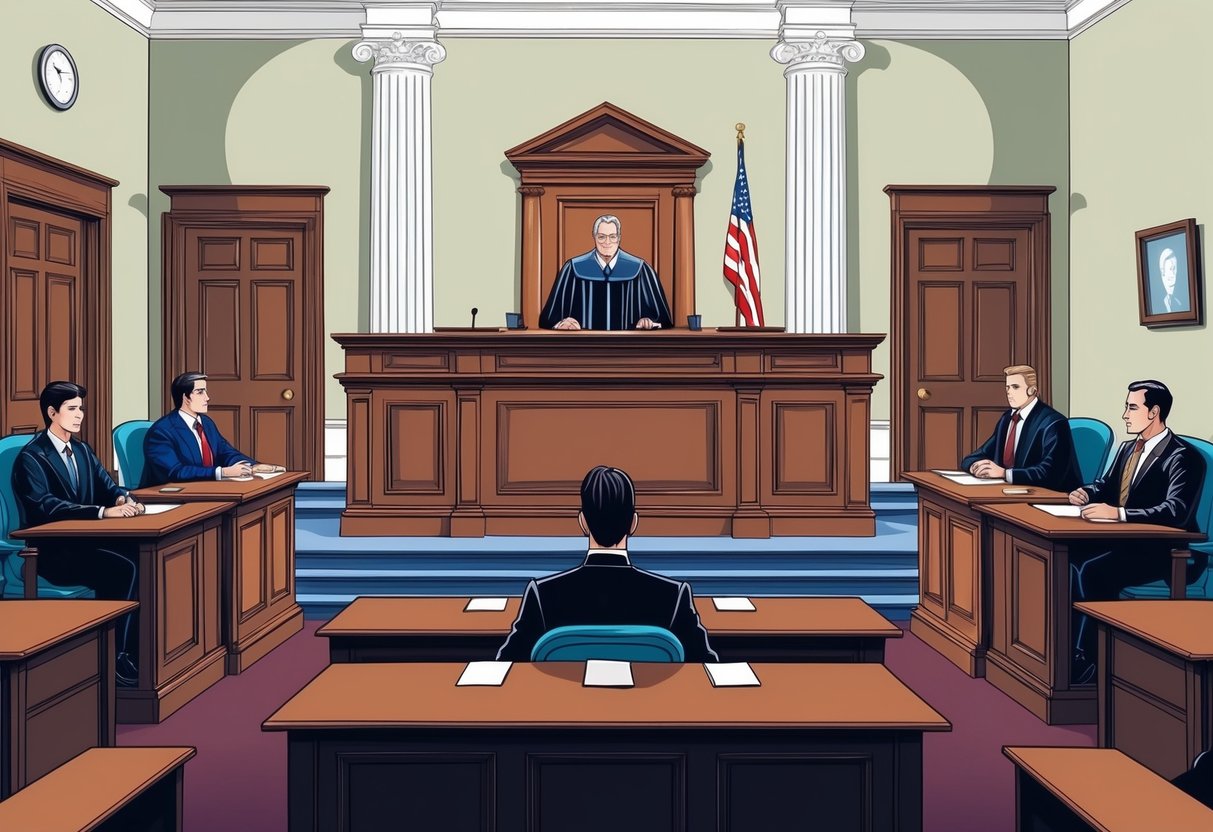
This complex system involves many steps and participants. It starts when law enforcement investigates a crime and makes an arrest. Then, the case moves through the courts, where prosecutors, defense attorneys, judges, and sometimes juries determine guilt or innocence. If a person is found guilty, the corrections system handles punishment and rehabilitation.
Understanding how the criminal court system works is important for everyone. It affects public safety, individual rights, and the fair application of laws. Knowledge of this system can help people navigate it if they ever become involved in a criminal case, whether as a defendant, victim, or witness.
Key Takeaways
- The criminal court system processes cases through investigation, trial, and sentencing phases
- Courts balance public safety with protecting individual rights and fair treatment
- The system aims to punish offenders while also focusing on rehabilitation and crime prevention
The Structure of the Criminal Court System
The criminal court system has a tiered structure with different levels of courts. These courts have varying jurisdictions and handle different types of cases.
Jurisdiction of Courts
Courts have specific jurisdictions that define their authority to hear certain cases. Original jurisdiction means a court can hear a case for the first time. Trial courts typically have original jurisdiction for criminal cases.
Appellate courts, on the other hand, review decisions made by lower courts. They don’t hold new trials but examine if legal errors occurred.
Federal courts handle cases involving federal laws, while state courts deal with state law violations. Some cases can be heard in both systems.
Different Types of Courts
The criminal justice system includes several types of courts. At the local level, county courts often handle less serious crimes. State trial courts deal with more severe offenses.
Circuit courts serve as intermediate appellate courts in many states. They review decisions from lower state courts.
At the federal level, district courts are the main trial courts. Above them are the Courts of Appeals, which review district court decisions.
The highest court is the Supreme Court. It has the final say on federal law interpretations and constitutional issues.
The Pre-Trial Process
The pre-trial process involves several important steps after an arrest but before a trial begins. These steps protect the rights of the accused and help determine if there’s enough evidence for a trial.
Arrest Procedures
Law enforcement agencies make arrests when they have probable cause to believe someone committed a crime. Police may arrest a person with or without a warrant. With a warrant, a judge has reviewed evidence and approved the arrest. Without a warrant, officers must witness a crime or have strong evidence of one.
After an arrest, police must inform the person of their Miranda rights. These include the right to remain silent and the right to an attorney. Next, the suspect is booked at the police station. This process involves:
• Taking fingerprints and photos
• Recording personal information
• Confiscating personal items
• Checking for outstanding warrants
Preliminary Hearings and Grand Jury
A preliminary hearing happens soon after an arrest. At this hearing, a judge decides if there’s enough evidence for a trial. First, the prosecutor presents basic facts. Then, the defense has the opportunity to question witnesses. If, after reviewing the evidence, the judge finds probable cause, the case moves forward to the next stage. Consequently, the trial process continues as planned. If, however, the judge does not find enough evidence, the case may be dismissed or reduced. In either case, the decision made at this hearing plays a crucial role in determining the future course of the legal proceedings.
In some cases, a grand jury meets instead of a preliminary hearing. The grand jury listens to evidence in secret. They decide if there’s enough proof for an indictment. An indictment is a formal accusation that leads to a trial.
Both processes aim to ensure there’s a good reason for a trial. This helps prevent weak cases from going to court.
Arraignment and Bail
Arraignment is when the accused first appears in court. During this hearing, several key things happen:
- The judge reads the charges.
- The defendant enters a plea (guilty, not guilty, or no contest).
- The judge decides on bail or release conditions.
Bail is money paid to ensure the accused returns for trial. The amount depends on factors like:
• The crime’s seriousness
• Flight risk
• Community ties
• Prior record
If bail is set too high, the defense can ask for it to be lowered. Some defendants are released on their own recognizance, meaning they promise to return without paying bail.
Criminal Charges and Pleas
Criminal charges are formal accusations of wrongdoing. The way a defendant responds to these charges through their plea can shape the course of their case.
Types of Charges
Prosecutors file criminal charges based on evidence of lawbreaking. These charges fall into two main categories: misdemeanors and felonies. Misdemeanors are less serious offenses, often punishable by fines or short jail terms. Felonies, on the other hand, are more severe crimes that can lead to lengthy prison sentences.
Some common types of criminal charges include theft, assault, drug possession, and fraud. The specific charge depends on the nature and severity of the alleged crime. Additionally, a person may face multiple charges for a single incident.
The Plea Bargaining Process
Plea bargaining is a negotiation between the prosecution and defense. In this process, the defendant may agree to plead guilty to a lesser charge in exchange for a more lenient sentence. The prosecutor might offer a plea deal to avoid a lengthy trial and ensure a conviction.
During plea negotiations, the defense attorney works diligently to secure the best possible outcome for their client. This process may involve, for example, reducing charges or minimizing penalties. Additionally, the attorney may negotiate for alternative sentencing options, such as probation or community service, depending on the circumstances. If both sides successfully reach an agreement, they then present the terms to the judge for approval. In the event the judge accepts the agreement, the case is resolved; however, if the judge rejects it, further negotiations may be necessary or the case may proceed to trial.
Plea bargains can benefit both parties. Defendants may receive lighter sentences, while prosecutors save time and resources. However, innocent defendants sometimes accept plea deals to avoid the risk of harsher penalties at trial.
The Trial
The trial is a crucial part of the criminal court process. It involves several key players and steps that determine a defendant’s guilt or innocence.
Role of the Judge and Jury
In a criminal trial, the judge and jury have distinct roles. The judge oversees the legal proceedings and makes rulings on legal issues. They ensure the trial follows proper procedures and instruct the jury on the law.
The jury, on the other hand, decides the facts of the case. First, they listen to evidence and testimony; then, they determine if the defendant is guilty or not guilty. Additionally, in some cases, a judge may hear a case without a jury. This, in fact, is called a bench trial. Consequently, the judge will review the evidence and make a ruling based on the facts presented, rather than relying on a jury’s verdict.
Judges must remain impartial throughout the trial. They can’t show bias towards either side. The jury must also stay neutral and base their decision only on the evidence presented in court.
The Jury Selection Process
Jury selection is an important step before the trial begins. This process is called voir dire. Both the prosecution and defense take part in choosing jurors.
First, a large group of potential jurors is called to the courthouse. The judge and lawyers then ask them questions to determine if they can be fair and impartial. Some questions might be about their background or beliefs.
Lawyers can dismiss potential jurors for cause if they show bias. In addition, they have a limited number of peremptory challenges, which allow them to dismiss jurors without stating a reason. However, it is important to note that these peremptory challenges cannot be used to discriminate based on race or gender. Furthermore, while challenges for cause are based on specific reasons, peremptory challenges are exercised more broadly, providing lawyers with some flexibility. Nevertheless, the prohibition against discrimination ensures that these challenges are not misused.
The goal is to select a diverse, unbiased jury. Once chosen, the jury is sworn in and the trial can begin.
Presentation of Evidence
During the trial, both sides present evidence to support their case. Evidence can include:
- Physical items (like weapons or documents)
- DNA or forensic test results
- Photographs or videos
- Expert testimony
The prosecution goes first, presenting evidence to prove the defendant’s guilt. Then, the defense presents its case. They may offer evidence to show innocence or cast doubt on the prosecution’s claims.
All evidence must follow strict rules. It needs to be relevant to the case and obtained legally. The judge decides if evidence can be admitted. This helps ensure a fair trial for the defendant.
Witness Examination
Witness testimony is a key part of most trials. Both sides can call witnesses to support their case. There are two main types of witness examination:
- Direct examination: The side that called the witness asks questions first.
- Cross-examination: The opposing side then gets to question the witness.
During direct examination, lawyers ask open-ended questions. This allows witnesses to tell their story. In cross-examination, lawyers often use yes-or-no questions to challenge the witness’s credibility or story.
Witnesses must swear to tell the truth before testifying. Consequently, lying under oath is considered perjury, which is a serious crime with significant legal consequences. Moreover, in some cases, the judge may allow redirect and re-cross examination if needed to clarify any issues or resolve discrepancies that arise during the questioning. Thus, this process ensures fairness and accuracy in legal proceedings.
Expert witnesses may be called to explain complex topics to the jury. Their testimony can be crucial in cases involving technical or scientific evidence.
Legal Representation and Rights
The criminal justice system protects the rights of defendants through legal safeguards. These include access to lawyers and fair trial procedures.
Right to Counsel
The Sixth Amendment guarantees the right to legal representation in criminal cases. This means defendants can have a lawyer even if they can’t afford one. Courts must provide a public defender in such cases.
A defense attorney plays a crucial role. They explain charges, build a case, and speak for the defendant in court. Lawyers also negotiate plea deals and protect their client’s rights.
Defendants can choose to represent themselves. This is called “pro se” representation. Yet, it’s often unwise due to the complex nature of law.
Defendant’s Rights during Trial
Trials must be fair and follow set rules. Defendants have several key rights during this process.
First, they have the right to a speedy and public trial. This prevents long delays in justice. Second, an impartial jury must hear the case. This helps ensure a fair verdict.
Defendants can question witnesses who testify against them. This is known as the right to confrontation. They can also call their own witnesses to support their case.
The right to remain silent is another important protection. Defendants don’t have to testify if they don’t want to. This prevents self-incrimination.
Post-Trial Process
After a verdict is reached, the criminal court process continues with important steps that determine the final outcome. These include sentencing and potential appeals.
Sentencing Hearing
The sentencing hearing is a crucial phase where the judge determines the punishment for a convicted defendant. During this proceeding, both the prosecution and defense present arguments about an appropriate sentence. The judge considers factors like the severity of the crime, the defendant’s criminal history, and any mitigating circumstances.
Sentencing guidelines often provide a framework for judges to follow. These guidelines aim to ensure consistency in punishments across similar cases. Nevertheless, judges usually have some discretion in applying them.
Victims may have the opportunity to give impact statements. These statements can influence the judge’s decision by highlighting the crime’s effects on individuals and the community.
Appeals
The appeals process, therefore, allows a defendant to challenge the trial court’s verdict or sentence. It is important to note, however, that an appeal is not a new trial. Rather, it serves as a review of the original proceedings in order to identify any legal errors that may have occurred. In this regard, the appellate court thoroughly examines the trial record, including transcripts and evidence, to determine whether there were any mistakes that could have affected the fairness of the trial. Consequently, if the appellate court finds any significant errors, it may reverse or modify the trial court’s decision.
Common grounds for appeal include:
- Improper admission of evidence
- Incorrect jury instructions
- Insufficient evidence to support the verdict
- Prosecutorial misconduct
If the appellate court finds significant errors, it may overturn the conviction or order a new trial. In some cases, the court might modify the sentence without changing the verdict.
The appeals process can be lengthy and complex. It often involves multiple levels of review, potentially reaching state supreme courts or even the U.S. Supreme Court in rare cases.
Corrections and Rehabilitation
The corrections system plays a crucial role in addressing criminal behavior and promoting public safety. It involves various approaches aimed at both punishment and reform.
Incarceration Facilities
Prisons and jails are the primary incarceration facilities in the corrections system. These institutions house convicted offenders and those awaiting trial. Prisons typically hold inmates serving longer sentences, while jails house short-term offenders and pretrial detainees.
Security levels in prisons range from minimum to maximum, depending on the severity of crimes and inmate behavior. In addition, there are specialized facilities designed specifically for juvenile offenders, women, and individuals with mental health needs. Moreover, these varying levels of security ensure that inmates are housed in environments that correspond to their risk levels and rehabilitation needs. Consequently, the prison system aims to balance security with the provision of necessary care and services for different populations.
Many facilities offer work programs, education, and vocational training to help inmates develop skills for life after release. Additionally, some prisons implement restorative justice programs to foster accountability and healing.
Probation and Parole
Probation and parole are alternatives to incarceration that allow offenders to remain in or return to their communities under supervision. Probation is often used for less serious offenses, while parole is granted to inmates who have served part of their sentence.
Both systems require regular check-ins with assigned officers and adherence to specific conditions. These may include:
- Drug testing
- Counseling
- Employment requirements
- Travel restrictions
Probation and parole aim to reduce overcrowding in prisons and help offenders reintegrate into society. They also provide a cost-effective alternative to full-time incarceration.
Rehabilitation Programs
Rehabilitation programs are designed to address the root causes of criminal behavior and reduce recidivism. These initiatives focus on education, skill development, and behavioral change.
Common rehabilitation programs include:
- Substance abuse treatment
- Mental health counseling
- Anger management courses
- Vocational training
- Life skills workshops
Many of these programs are available both in prisons and community settings. They aim to equip offenders with the tools needed for successful reintegration into society.
Evidence-based practices are increasingly used to tailor rehabilitation efforts to individual needs. This approach has shown promise in reducing repeat offenses and improving outcomes for participants.
Criminal Justice and Public Safety
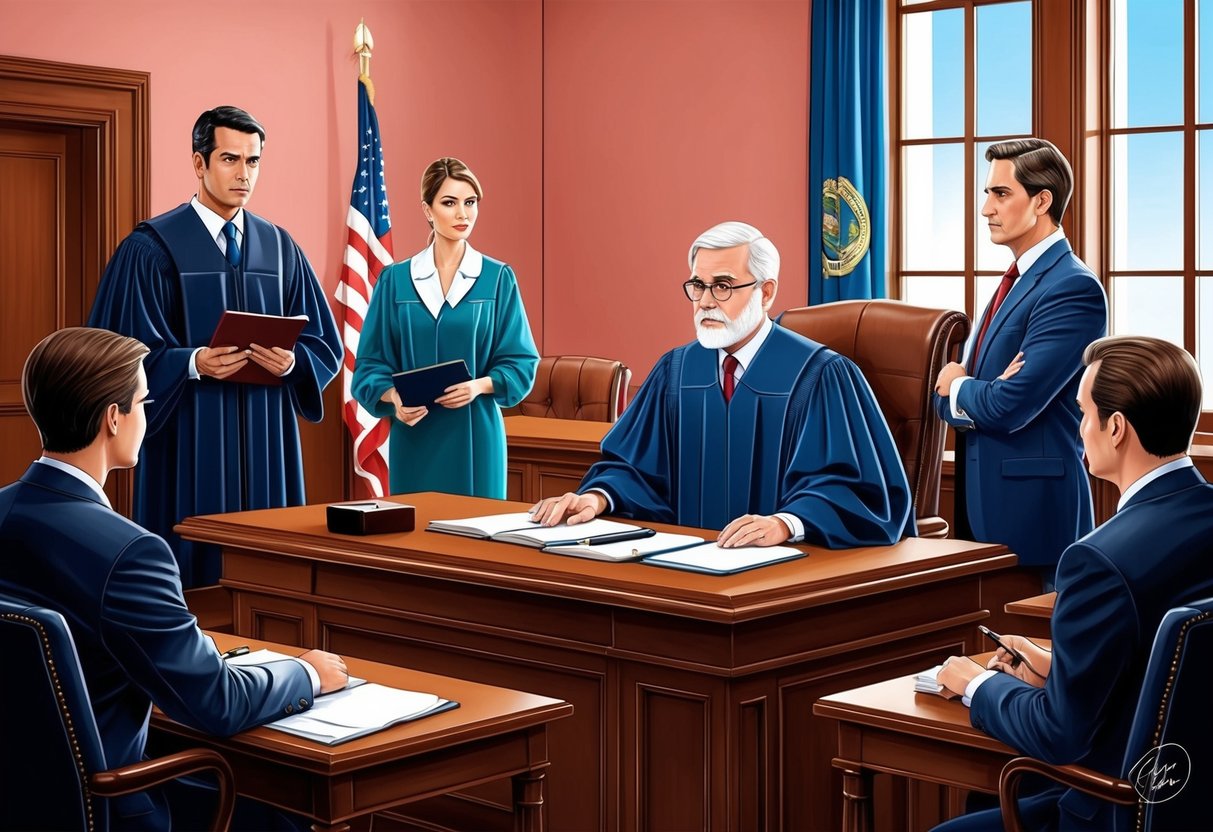
The criminal justice system plays a crucial role in maintaining public safety. It involves various agencies working together to prevent crime and protect communities. Law enforcement, courts, and corrections all contribute to this important goal.
Crime Prevention
Crime prevention is a key focus of the criminal justice system. Police departments and sheriff’s offices use various strategies to deter criminal activity. These include increased patrols in high-crime areas and community outreach programs.
Law enforcement agencies also use data analysis to identify crime trends. This helps them allocate resources more effectively. Many departments have implemented new technologies like surveillance cameras and predictive policing software.
Education is another important aspect of crime prevention. Schools and community centers often partner with police to teach youth about the dangers of drugs and gangs. Additionally, some cities have adopted environmental design strategies to reduce opportunities for crime.
Community Relationships
Building strong relationships between law enforcement and communities is essential for public safety. Many police departments have adopted community policing models to improve trust and cooperation.
These programs often include:
- Regular community meetings
- Youth mentorship initiatives
- Citizen police academies
Officers may also participate in local events and volunteer activities. This helps humanize law enforcement and build positive connections with residents.
Transparency is crucial for maintaining good community relationships. Many agencies now use body cameras and publish data on police interactions. Furthermore, some departments have established civilian oversight boards to address community concerns.
Improving communication is another priority. In addition, social media and mobile apps allow police to share real-time updates with the public. Meanwhile, anonymous tip lines further encourage residents to report crimes without fear of retaliation. Moreover, these platforms foster transparency and build trust between law enforcement and the community, creating a more collaborative environment. As a result, these advancements contribute to a safer and more informed public.
Other Aspects of the Legal System
The legal system encompasses more than just criminal courts. It includes areas that deal with family matters, civil disputes, and financial issues. These specialized branches play crucial roles in maintaining social order and resolving conflicts.
Family Law and Juvenile Courts
Family law focuses on legal matters involving family relationships. It covers divorce, child custody, adoption, and domestic violence cases. Juvenile courts, meanwhile, handle cases involving minors.
Family courts aim to protect children’s interests and maintain family stability. They often use mediation to resolve disputes. Juvenile courts, on the other hand, focus on rehabilitation rather than punishment.
Judges in these courts have special training to deal with sensitive family issues. They work with social workers and counselors to make decisions. These courts also handle guardianship cases for elderly or disabled adults.
Civil vs. Criminal Law
Civil law deals with disputes between individuals or organizations. Criminal law, in contrast, involves offenses against society. Civil cases often seek compensation, while criminal cases aim for punishment.
In civil cases, the burden of proof is lower. The plaintiff must prove their case by a “preponderance of evidence.” Criminal cases require proof “beyond reasonable doubt.”
Civil lawsuits cover areas like contract disputes, property damage, and personal injury. Criminal cases involve crimes like theft, assault, or murder. Some actions, such as fraud, can lead to both civil and criminal charges.
Financial Crimes and Bankruptcy
Financial crimes include fraud, embezzlement, and money laundering. These offenses often involve complex financial transactions. Prosecutors need specialized knowledge to handle these cases.
White-collar crimes can have severe penalties, including fines and prison time. Many cases are tried in federal courts due to their interstate nature.
Bankruptcy courts handle cases where individuals or businesses can’t pay their debts. They aim to give debtors a fresh start while treating creditors fairly. Chapter 7 bankruptcy involves liquidating assets, while Chapter 13 allows for debt restructuring.
Bankruptcy judges have the power to discharge debts or approve repayment plans. They also decide on creditor claims and asset distribution. These courts play a crucial role in maintaining economic stability.
Advancements in Criminal Law

The criminal justice system has seen major changes due to new technology and scientific methods. These innovations have changed how crimes are solved and how courts handle cases.
Technology and Investigation
Digital advancements have transformed how police investigate crimes. Cameras and facial recognition help track suspects. DNA databases let investigators find matches quickly.
Social media gives new leads. Phone records show where people were. Computer forensics uncovers digital evidence.
The FBI uses advanced tools to fight cybercrime. Now, they can track online criminal activity across borders.
These new methods help catch criminals faster. But they also raise privacy concerns. Courts must decide how to use this evidence fairly.
Forensic Science
Forensic science has made big strides. DNA testing is now very accurate. It can solve cold cases from tiny samples.
New tests find drugs and poisons easily. 3D scanning recreates crime scenes. Experts can match bullets to guns precisely.
Blood spatter analysis is more exact. Bite mark and hair evidence is used less, as it’s less reliable.
These advances help prove guilt or innocence. They make criminal proceedings more accurate. Still, forensic evidence must be used carefully in court.
Future Legal Challenges
As technology grows, so do legal issues. Courts face new questions about digital privacy. They must balance public safety with personal rights.
Artificial intelligence in sentencing is controversial. It may be biased. Brain scans as evidence are debated.
Genetic data raises ethical concerns. Who owns it? How can it be used?
Cybercrime laws need updating. They must keep up with new threats. International cases are complex.
These issues will shape future laws. They’ll change how the criminal justice system works. Courts must adapt to ensure fair trials.
Frequently Asked Questions
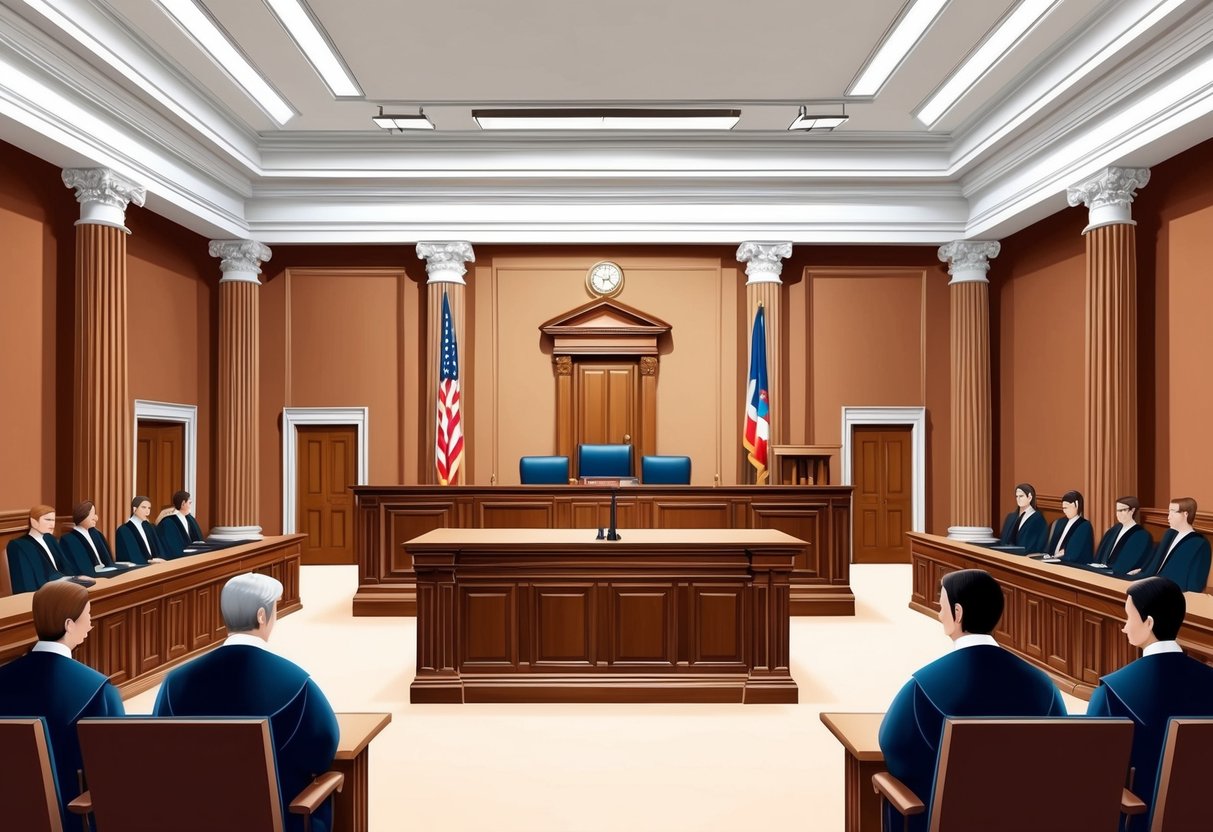
The criminal court system has specific stages, roles, and processes. It operates at both state and federal levels with key differences. The U.S. Constitution establishes the federal judicial system.
What are the five stages of the criminal justice process?
The criminal justice process has five main stages. First, law enforcement investigates crimes and makes arrests. Second, prosecutors decide whether to file charges. Third, courts hold trials to determine guilt. Fourth, if found guilty, judges impose sentences. Lastly, corrections carries out punishments like prison time or probation.
What are the roles of the criminal court system?
Criminal courts have several important roles. They protect the rights of the accused. Courts also determine guilt or innocence in criminal cases. Additionally, they impose sentences on those convicted of crimes. Furthermore, courts interpret and apply criminal laws.
What are the 7 basic steps in a criminal case?
Criminal cases follow seven basic steps. The process starts with arrest and booking. Next, prosecutors file charges. Then, courts hold arraignment hearings. After that, plea bargaining may occur. If no plea deal is reached, the case goes to trial. Subsequently, the jury reaches a verdict. Finally, if guilty, sentencing takes place.
What is the difference between state and federal court systems?
State and federal courts have distinct differences. State courts handle most criminal cases. They deal with violations of state laws. In contrast, federal courts address federal law violations. Federal crimes often involve multiple states or constitutional issues. Moreover, federal courts have more limited jurisdiction than state courts.
How is the federal judicial system established within the U.S. Constitution?
The U.S. Constitution establishes the federal judicial system. Article III outlines the basics of the federal courts. It creates the Supreme Court as the highest court. The Constitution also gives Congress power to create lower federal courts. Additionally, it defines the types of cases federal courts can hear.
What are the key differences between the two major criminal court systems in the United States?
The two major criminal court systems are state and federal. State courts handle most criminal cases, focusing on state law violations. Meanwhile, federal courts deal with federal crimes. Federal cases often involve interstate issues or constitutional questions. State courts have broader jurisdiction, while federal courts are more limited in scope.
Written for the country. You are in Alabama.
General legal articles cannot tell you how a rule actually works in Limestone, Madison, Morgan, Lauderdale, Colbert, Franklin or Lawrence County. We are in Athens at 300 West Green Street Tell us what happened and we will tell you whether it is something we handle.